Heat Pump Water Heater in Bangalore: Is It Worth It?
Choosing the right water heating system can make a noticeable difference to household energy consumption, especially when hot water is needed every day. Traditional electric geysers are convenient, but they can consume considerable electricity when used frequently. This has led many homeowners, apartments, hotels, and commercial properties to explore more energy efficient alternatives such as a heat pump water heater in Bangalore.
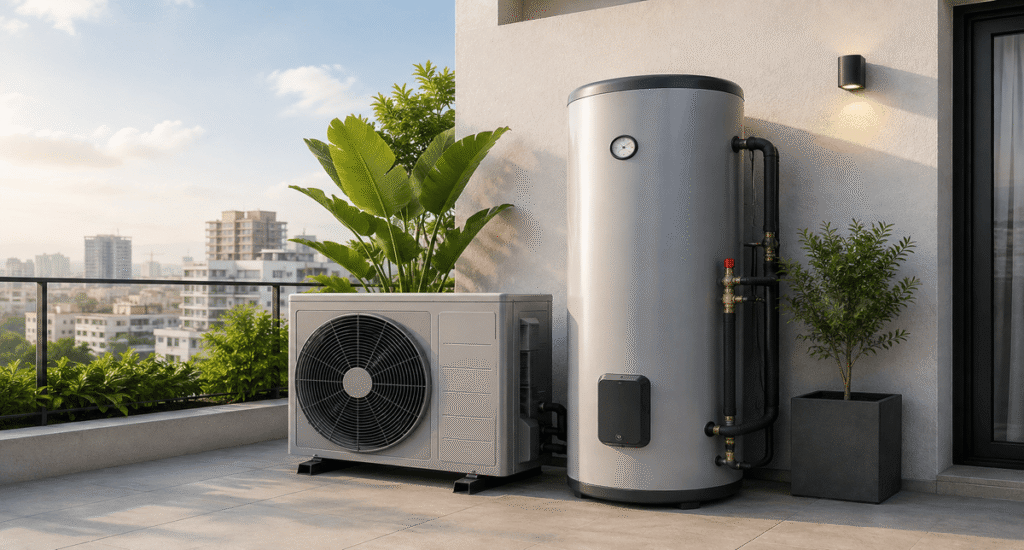
A heat pump water heater works differently from a conventional electric heater. Instead of using electricity mainly to generate heat, it uses electricity to transfer available heat from the surrounding air into the water. This approach can significantly improve energy efficiency.
For homeowners comparing a solar water heater system, electric geyser, and heat pump, the important question is not simply which technology is newest. It is whether the system suits the property’s hot-water demand, available space, budget, and expected long-term usage.
Superior Solar, a trusted Best Solar company Bangalore customers can consider for solar and heat pump solutions, provides different water-heating options for residential and commercial requirements. So, is a heat pump water heater actually worth the investment in Bangalore? The answer depends on how and where it is used.
What Is a Heat Pump Water Heater?
A heat pump water heater uses a refrigeration cycle to transfer heat from surrounding air into water stored in a tank. BEE describes the technology as transferring heat through a refrigerant cycle, where heat is absorbed from the surrounding air and then transferred to water. This is different from a conventional electric geyser. An electric geyser generally uses a resistance heating element to heat the water directly. A heat pump, on the other hand, uses electricity to operate a compressor and other components that move heat into the water.
In simple terms, it is similar to the way an air conditioner moves heat, but the purpose is different. Instead of removing heat from an indoor space, a heat pump water heater captures heat from the surrounding air and transfers it to water.
That difference is important because moving heat can require less electricity than creating heat directly. High-efficiency heat pump water heaters can be two to three times more efficient than conventional electric-resistance water heaters, according to the U.S. Department of Energy’s Building Science Education resources.
Why Are Heat Pump Water Heaters Becoming Popular?
The biggest reason is energy efficiency. Water heating can become a significant part of electricity consumption in homes where multiple people regularly take hot showers, use hot water for cleaning, or require hot water throughout the day. Reducing the electricity needed for water heating can therefore help control long-term operating costs.
A heat pump can provide the same basic service while using electricity more efficiently. BEE’s Energy Conservation and Sustainable Building Code materials also compare air source and water source heat pumps favourably against conventional electric water heating in illustrative energy-consumption calculations. There are also environmental benefits. Because the system transfers heat rather than relying entirely on direct electrical resistance heating, it can reduce energy consumption. The overall environmental benefit becomes even greater when the electricity comes partly from renewable sources. For properties looking for a practical step toward energy efficiency, this makes a heat pump water heater for home an option worth considering.
Is a Heat Pump Water Heater Good for Bangalore?
Yes, Bangalore can be a suitable location for heat pump water heating because the city generally has a moderate climate rather than extremely cold outdoor conditions. Heat pumps work by extracting heat from surrounding air. The warmer the available air, the easier it generally is for an air-source system to extract usable heat. However, actual performance depends on the model, installation conditions, ambient temperature, water temperature requirements, tank size, and usage pattern.
This makes professional system selection important. A heat pump should not simply be selected based on its advertised capacity. The household’s daily hot-water requirement and installation environment should also be evaluated. For homes that require hot water regularly throughout the year, a heat pump water heater in Bangalore can provide an efficient alternative to conventional electric heating.
How Much Electricity Can a Heat Pump Save?
The exact savings cannot be guaranteed because electricity consumption varies from one property to another. Factors such as the number of users, litres of hot water required, desired water temperature, electricity tariff, operating schedule, insulation, and equipment efficiency all influence the final bill.
However, the basic efficiency advantage is clear. Heat pump systems use electricity to transfer heat instead of producing all the heat through an electrical resistance element. BEE’s 2024 building-code material provides illustrative consumption figures showing lower energy consumption for air-source and water-source heat pumps compared with conventional electrical water heating.
This means a household using large quantities of hot water every day may have more opportunity to recover the initial investment through lower running costs. For occasional hot-water use, however, the financial advantage may take longer to justify the initial purchase and installation cost.
Is a Heat Pump Better Than an Electric Geyser?
A heat pump can be more energy efficient than a conventional electric geyser, but that does not automatically make it the right choice for every property. An electric geyser is generally simple, familiar, and relatively easy to install. It can also provide hot water quickly depending on its capacity and heating element.
A heat pump typically has a higher initial investment and requires more careful installation. However, its lower energy consumption can make it attractive for households and businesses with high or regular hot-water demand.
The choice can be viewed this way:
| Factor | Heat Pump Water Heater | Electric Geyser |
|---|---|---|
| Energy efficiency | High | Moderate |
| Initial investment | Usually higher | Usually lower |
| Running cost | Lower potential | Higher potential |
| Installation | Requires planning | Relatively simple |
| Best suited for | Regular/high hot-water use | Low/moderate usage |
| Long-term energy savings | Strong potential | Limited |
The right decision should therefore consider the total cost of ownership rather than only the purchase price.
Can a Heat Pump Replace a Solar Water Heater System?
Not always. In fact, the two technologies can complement each other.
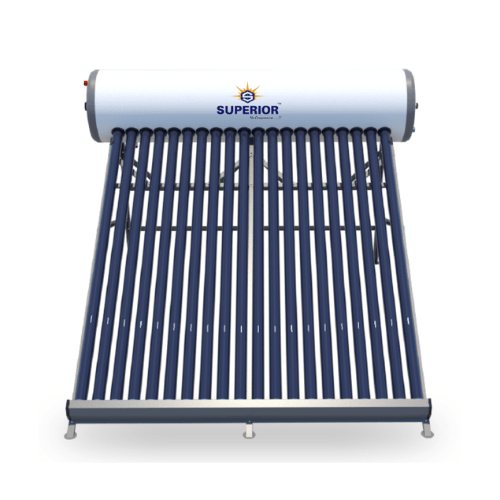
A solar water heater system uses sunlight as its primary energy source, while a heat pump uses electricity to transfer heat from the surrounding air. Bangalore’s relatively favourable sunlight conditions make solar water heating a practical option for properties with suitable rooftop space. A solar water heater can be particularly attractive for independent houses and properties with enough terrace space and good solar exposure. Superior Solar offers solar water heater capacities ranging from 110 litres to 510 litres, with different models designed for different household sizes.
A heat pump may be more suitable when rooftop conditions are unsuitable for solar installation, when hot water is required consistently regardless of sunlight, or when a property has a higher and more predictable hot-water demand. In some projects, a hybrid approach can also be considered. The best option depends on the property’s design and usage.
What Are the Benefits of a Heat Pump Water Heater?
The primary advantage is energy efficiency. Because the system transfers heat instead of generating it directly, it can deliver hot water with lower electricity consumption than conventional resistance heating under suitable operating conditions.
Other potential advantages include:
- Lower long-term electricity consumption
- Reduced dependence on conventional electric heating
- Suitable for regular hot-water requirements
- Potentially lower operating costs
- Compatibility with renewable-energy strategies
- Useful for homes and commercial properties with high hot-water demand
The actual benefits depend heavily on choosing the correct capacity and having the system installed properly.
What Should You Check Before Buying?
Buying a heat pump simply because it promises energy savings can lead to disappointment if the system is incorrectly sized.
Before purchasing, homeowners should consider the following:
Daily hot-water requirement: Estimate how many people use hot water and how much water is required each day.
Tank capacity: The storage capacity should match the property’s demand. An undersized system may struggle during peak usage, while an oversized system can increase the initial investment unnecessarily.
Installation location: Heat pumps need suitable surroundings for airflow and proper operation. Installation requirements vary by model.
Efficiency and COP: Check the manufacturer’s efficiency specifications and operating conditions rather than looking only at the purchase price. BEE’s building-energy guidance uses COP as an important performance measure for heat pump systems.
Service support: A reliable local solar company or heat pump provider can make maintenance and troubleshooting easier.
Warranty: Check coverage for the tank, compressor, electronics, and other major components separately.
Is It Suitable for Apartments and Villas?
A heat pump water heater for home use can be suitable for villas and some apartment applications, but the installation conditions need to be checked. For an independent villa, there is generally more flexibility in selecting the installation location and designing the hot-water system. A heat pump can be considered where regular hot-water consumption makes energy efficiency a priority.
Apartments may require additional planning because space, electrical connections, plumbing, noise considerations, and building-management rules can influence installation. For larger properties such as hotels, hostels, hospitals, restaurants, and other facilities, heat pump technology can become even more interesting because hot-water demand is much higher. BEE’s building-energy guidance specifically discusses heat pumps and efficient hot-water systems in larger building applications.
How Does a Heat Pump Compare With a Solar Water Heater?
Both systems aim to reduce dependence on conventional electric water heating, but they use different energy sources.
A solar water heater uses sunlight, which means its operating cost can be very low once installed. Its performance, however, is affected by sunlight availability, shading, collector orientation, and weather conditions. A heat pump can operate without direct sunlight and can provide a more controlled heating process. It does use electricity, but its efficiency can be considerably higher than direct resistance heating.
Therefore, the better choice depends on the property. A home with a large, unobstructed terrace and good sunlight may benefit significantly from a solar water heater system. A property with limited rooftop space or consistent hot-water requirements may find a heat pump more practical.
What Maintenance Does a Heat Pump Need?
Heat pumps are not completely maintenance free.
Regular inspection helps ensure that the system continues operating efficiently. Depending on the model and installation, maintenance may include checking filters, airflow, electrical connections, water connections, controls, and other components. The water tank and plumbing should also be inspected periodically. If the property has hard water, scale and mineral deposits can become an important consideration for any water-heating system.
Professional servicing is preferable when there is a performance issue or when components such as the compressor or refrigerant circuit require attention.
Is a Heat Pump Worth the Initial Cost?
This is where usage makes the biggest difference.
If a household uses very little hot water, a lower-cost electric geyser may remain a practical choice. The electricity savings from a heat pump may not be large enough to justify the higher upfront investment quickly. For a larger family, rental property, hotel, hostel, commercial facility, or any location where hot water is used heavily every day, the calculation can be different.
Lower operating costs over several years can help offset the initial investment. The payback period should be calculated using the actual electricity consumption, tariff, equipment cost, installation cost, expected operating hours, and maintenance requirements rather than relying on a generic savings figure.
Why Choose Superior Solar for Water Heating Solutions?
Selecting the right technology is only one part of the process. Proper sizing, installation, plumbing, insulation, and after-sales support also influence the system’s performance. Superior Solar provides solar water heaters and heat pump solutions for residential and commercial requirements. Its website lists heat pump products alongside solar water heaters, electrical geysers, water purifiers, and other energy-related products.
The company also provides solar water heater options in multiple capacities. For example, its 160-litre model is positioned for families of around three to four people, while its 210-litre model is designed for approximately four to five people. Homeowners can also explore Superior Solar’s guide on factors to consider before installing a solar water heater system when comparing solar and heat pump options.
For broader product options, the Superior Solar product collection includes heat pumps, solar water heaters, electrical geysers, and other products.
Conclusion:
For many households and commercial properties, it can be a worthwhile long-term investment, particularly when hot water is required frequently and electricity consumption is a major concern. Its biggest advantage is efficiency. Instead of producing heat directly through electrical resistance, the system transfers heat from the surrounding air into the water. This can significantly reduce energy consumption compared with conventional electric water heating under suitable conditions.
However, a heat pump is not automatically the best option for every home. A solar water heater system may be a better choice when there is sufficient rooftop space and sunlight. An electric geyser may remain suitable for properties with low hot-water consumption. The smartest approach is to compare the property’s daily hot-water demand, available installation space, electricity costs, budget, and long-term goals before making a decision.
With the right sizing and professional installation, a heat pump can be an efficient and practical water-heating solution for Bangalore. Superior Solar, an experienced solar company offering solar and heat pump solutions, can help homeowners and businesses evaluate suitable options according to their requirements.
Frequently Asked Questions
1. Is a heat pump water heater good for Bangalore?
Yes. Bangalore’s moderate climate can provide suitable operating conditions for air-source heat pump water heaters. Actual performance depends on the model, installation conditions, water temperature requirements, and usage.
2. Does a heat pump water heater save electricity?
Yes, it can use significantly less electricity than conventional resistance water heaters because it transfers heat instead of generating all the heat directly. Actual savings depend on usage and system efficiency.
3. Is a heat pump better than a solar water heater?
Neither is universally better. Solar water heaters can be highly economical when there is good sunlight and sufficient rooftop space. Heat pumps can be more practical where consistent hot water is required or solar installation is difficult.
4. How long does a heat pump water heater last?
Lifespan varies according to the brand, model, installation quality, operating conditions, and maintenance. Checking the manufacturer’s warranty and service provisions is important before purchase.
5. Can a heat pump work on cloudy days?
Yes. Unlike a solar water heater, a heat pump does not depend directly on sunlight. It extracts heat from the surrounding air, although operating efficiency can vary with ambient conditions.
6. Is a heat pump water heater expensive?
The initial cost is generally higher than a basic electric geyser. However, its lower potential running cost can make it financially attractive for properties with regular or high hot-water consumption.
7. Which is the best water heating system for a home?
There is no single answer for every home. A solar water heater system may be ideal for a sunny property with adequate terrace space, while a heat pump may suit homes requiring consistent hot water and lower electricity consumption. A professional assessment can help determine the appropriate solution.