How to Choose the Best Water Purifier for Home: 7 Things to Check
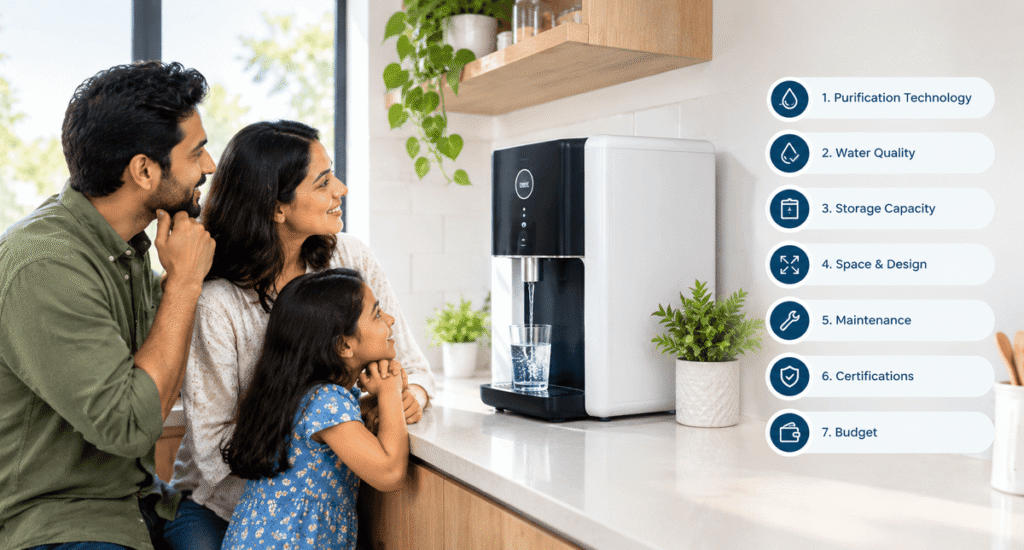
Choosing the right water purifier is an important step towards ensuring that your family has access to safe drinking water every day. With several purification technologies and models available, finding the best water purifier for home use can feel confusing. The right choice depends on your water source, water quality, family size, maintenance needs, and budget.
A suitable water purifier for home use should address the specific impurities present in your water rather than simply offering the most features. At Superior Solar Company, homeowners can explore water purification solutions alongside other essential household products. Understanding the basics of water purification will help you make a more informed decision and choose a system that suits your daily needs.
Why Do You Need a Water Purifier at Home?
Water supplied to homes can come from municipal pipelines, borewells, tankers, or other sources. Its quality may vary depending on the source, storage conditions, local water supply, and distribution system. Even water that looks clear may contain dissolved substances or microorganisms that cannot be identified by appearance alone. This is why checking water quality is an important first step before purchasing a home water purification system.
A suitable water purifier can help address specific water quality concerns, including certain dissolved impurities, unpleasant tastes, odours, and harmful microorganisms, depending on its technology and certified performance.
Before selecting a model, consider these questions:
- Where does your household water come from?
- Has the water been tested for relevant contaminants?
- Does it have a high level of dissolved solids?
- How many people will use the purifier daily?
- What maintenance and replacement costs can you manage?
Answering these questions will help you narrow down your options without paying for features you may not need.
1. How Do You Check Your Water Quality?
Water quality should be the starting point when deciding which water purifier is best for home use. Different water sources may contain different impurities, so one purification method may not be suitable for every household.
Check the TDS Level
Total dissolved solids (TDS) refers to the combined concentration of dissolved substances in water, including certain salts and minerals. A TDS meter can provide a quick reading, but it cannot identify individual contaminants or establish whether water is safe to drink.
A high TDS reading may indicate that further testing is needed. However, TDS alone should not determine whether you need an RO water purifier. Testing for relevant contaminants and understanding your water source will give you a clearer picture.
Look Beyond Taste and Appearance
Clear water is not necessarily safe, and unpleasant taste does not always indicate a health risk. If you suspect contamination, arrange appropriate water testing through a reliable laboratory or testing service. The results can help you determine whether your household needs filtration, disinfection, reverse osmosis, or a combination of technologies.
2. Which Type of Water Purifier Should You Choose?
Understanding the different types of water purifiers makes it easier to compare products. Each technology serves a different purpose, so check the manufacturer’s performance specifications before buying.
RO Water Purifier
A reverse osmosis (RO) water purifier pushes water through a specialised membrane to reduce many dissolved substances and certain contaminants. An RO system may be suitable when testing identifies dissolved contaminants that the particular model is designed to reduce. It is commonly considered for some groundwater sources, including borewell water, depending on the actual water composition. However, RO is not automatically the best option for every home. These systems can produce reject water and may require more maintenance than simpler filtration systems.
UV Water Purifier
A UV water purifier uses ultraviolet light to inactivate susceptible microorganisms, including certain bacteria, viruses, and parasites, when the system operates under suitable conditions. UV treatment does not remove dissolved salts or most chemical contaminants. It is therefore important to check whether the source water needs additional filtration or treatment.
UF Water Purifier
Ultrafiltration (UF) uses a membrane to remove certain suspended particles and microorganisms. Its effectiveness depends on the membrane and the system’s specifications. UF generally does not remove dissolved salts, making it unsuitable when the main concern is high levels of dissolved contaminants.
Activated Carbon Filters
Activated carbon filters help reduce unpleasant tastes and odours and can reduce certain organic chemicals, depending on the filter design. They are often used as one stage within a larger water purification system. However, activated carbon alone does not address every possible water contamination concern.
Which one is best? The right choice depends on your water test results, the contaminants you need to address, and the verified capabilities of the purifier. Some households may benefit from a combination of technologies rather than a single filtration method.
3. What Water Purifier Is Suitable for Your Water Source?
Your water source provides useful clues about the type of purification system you may need. However, source alone is not enough to make the final decision.
Municipal Water Supply
Municipal water is generally treated before distribution, but its quality can change during storage or distribution. The appropriate purifier depends on local water quality and any contamination risks identified through testing. A suitable filter or disinfection system may be sufficient in some cases, while other conditions may require additional treatment.
Borewell Water
Borewell water can contain varying concentrations of dissolved minerals and other substances, depending on the geology of the area. Testing is particularly useful before choosing an RO water purifier for borewell water at home. If testing identifies contaminants such as fluoride, nitrate, or other dissolved substances, select a system specifically designed and verified to reduce those contaminants.
Tanker Water
Tanker water quality can vary between suppliers and deliveries. Do not assume that every tanker supplies water of the same quality. Where possible, check the source and arrange testing if the water quality is uncertain. The results will help you select an appropriate home water purification system.
4. What Capacity Water Purifier Does Your Family Need?
Once you understand your water quality, consider how much purified water your household uses every day. The right capacity can help prevent frequent refilling and ensure sufficient drinking water is available during busy periods.
When comparing the best water purifier for home use, consider:
- Family size: A larger household may require greater storage capacity or a higher purification rate.
- Daily consumption: Consider drinking water, cooking, and other intended uses.
- Purification speed: Check how quickly the system produces purified water.
- Storage tank capacity: Make sure the tank suits your household’s routine.
- Space available: Measure the installation area, including room for servicing.
A family of two may have different needs from a household of six. Similarly, a home that frequently hosts guests may need more storage than a household with lower daily consumption. Compare the actual storage capacity and purification rate listed in the product specifications instead of relying on the size or appearance of the appliance.
5. What Features Should You Look for in a Water Purifier?
Modern water purifiers may offer multiple filtration stages and additional convenience features. However, the most useful features are those that address your water quality needs and make the appliance easier to maintain.
Check the Filtration Stages
Some purifiers combine sediment filters, activated carbon, RO membranes, UV treatment, and other components. Each stage should have a clear purpose. Do not assume that a purifier with more stages is automatically better. Check which contaminants the complete system is designed to reduce and whether its performance has been independently verified where applicable.
Consider Water Storage
A storage tank can be helpful when your household needs purified water throughout the day. Compare the tank capacity with your family’s daily consumption and available kitchen space.
Review Water and Power Requirements
Some systems need electricity to operate pumps, UV lamps, or other components. RO purifiers can also discharge reject water. Check the expected power consumption, water recovery information, operating pressure requirements, and installation conditions before making a purchase.
Look for Clear Product Specifications
A reliable product description should explain its purification technology, filter replacement requirements, maintenance instructions, and performance claims. Choose a product with documentation that clearly identifies what it can and cannot remove from your water.
6. How Much Does a Water Purifier Cost to Maintain?
The purchase price is only one part of the cost of owning a water purifier. Filter replacements, membrane changes, servicing, electricity, and water usage can affect the total cost over time.
Before buying a water purifier, ask about the following:
- Filter replacement: How often do filters need to be changed?
- Membrane costs: If the model uses an RO membrane, what is the replacement cost?
- Service availability: Is qualified servicing available when needed?
- Warranty coverage: Which parts and repairs are included?
- Operating costs: How much electricity and reject water should you expect?
Maintenance schedules vary by model and water quality. Water with higher sediment levels, for example, may cause certain filters to require more frequent replacement. Follow the manufacturer’s recommended service schedule. Delayed maintenance can affect the performance of the water purifier and may reduce its ability to treat water as intended. Comparing the long-term cost of two suitable models can help you identify the more practical option for your home.
7. How Do You Choose a Reliable Water Purifier Brand?
After narrowing down the technology and capacity, compare the brands and models available within your budget. A good water purifier should have clear specifications, appropriate performance claims, and manageable maintenance requirements.
Before purchasing, check:
- Product specifications and contaminant-reduction claims.
- Relevant certifications or independent performance testing.
- Warranty terms and the availability of replacement filters.
- Installation requirements and access to qualified technicians.
- Customer support and the availability of service information.
- The total cost of ownership, not just the initial price.
You can explore household solutions through Superior Solar Company. Compare the available water purification products and their specifications to identify a model that fits your household’s needs. Avoid selecting a purifier based only on advertisements, discounts, or claims that it is suitable for every water source. A product that matches your water quality is more useful than one with unnecessary features.
What Are the Common Mistakes to Avoid?
Choosing a water purifier becomes easier when you know which mistakes to avoid.
Buying without checking water quality: You may choose a technology that does not address the actual contaminants in your water.
Assuming RO is always necessary: RO can be useful for certain dissolved contaminants, but it is not required for every water source.
Ignoring maintenance costs: A low purchase price may not mean lower long-term expenses.
Choosing the wrong capacity: A small storage tank or slow purification rate may not meet your family’s daily requirements.
Ignoring product specifications: Always verify the system’s treatment capabilities rather than relying on broad claims about purification.
Delaying filter replacement: Regular maintenance is essential for keeping the system working as intended.
Taking time to compare these factors can help you make a more informed purchase and avoid unnecessary expenses.
Conclusion
Choosing the right water purifier for your home begins with understanding your water quality. From comparing RO, UV, UF, and activated carbon filtration to checking storage capacity, maintenance costs, and product specifications, every factor plays a role in finding a suitable solution. The best water purifier for home use is not necessarily the most expensive or feature rich model. It is the one that addresses your household’s water quality concerns, meets your daily requirements, and remains practical to maintain.
Superior Solar Company encourages homeowners to compare water purification options carefully and review product specifications before making a decision. By choosing a purifier based on your water source and household needs, you can make a more informed investment in your everyday drinking water.
Frequently Asked Questions
1. Which water purifier is best for home use?
The best water purifier depends on your water source and the contaminants present. RO may be appropriate for certain dissolved contaminants, while UV can help inactivate susceptible microorganisms. Testing your water helps determine the right option.
2. Is an RO water purifier necessary for every home?
No. RO is not necessary for every household. It is most useful when the water contains dissolved contaminants that the particular system is designed to reduce. Check water quality before selecting an RO purifier.
3. What is the difference between RO, UV, and UF water purifiers?
RO reduces many dissolved substances and certain contaminants. UV uses ultraviolet light to inactivate susceptible microorganisms but does not remove dissolved salts. UF filters certain particles and microorganisms but generally does not remove dissolved salts.
4. How do I choose a water purifier based on water quality?
Identify your water source and arrange testing for relevant physical, chemical, and microbiological parameters. Use the results to choose a purifier with verified performance against the contaminants found.
6. How often should a water purifier filter be changed?
Replacement frequency depends on the model, filter type, water quality, and usage. Follow the manufacturer’s instructions and replace filters or membranes when required.
7. What should I check before buying a water purifier?
Check your water quality, purification technology, contaminant-reduction claims, storage capacity, maintenance costs, warranty, and service availability. These factors help you compare models more effectively.
8. Can one water purifier work for both borewell and municipal water?
Some models may be suitable for different water sources, but not every purifier can handle every type of water. Check the water quality and the model’s specifications before using it with a particular source.