
7 Benefits of Solar Lighting Systems for Outdoor & Rural Properties
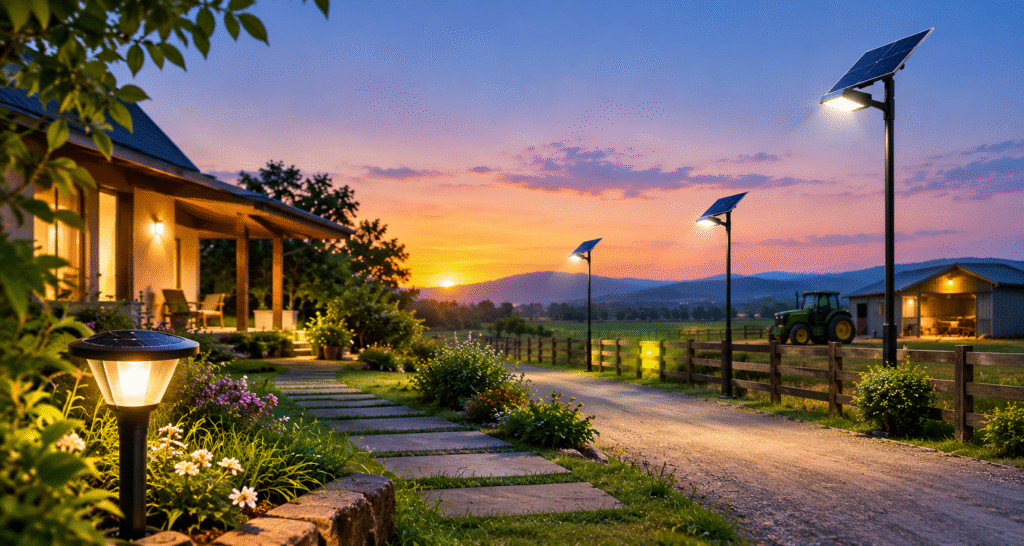
Outdoor lighting is important for keeping homes, gardens, farms, pathways, and surrounding areas safe and functional after sunset. However, lighting large outdoor spaces can increase electricity consumption, especially when lights operate for several hours every night. Solar lighting offers a practical alternative by using sunlight to generate and store energy for nighttime illumination.
Superior Solar Company helps customers explore solar energy products and solutions for residential and outdoor applications. With suitable solar outdoor lights and solar lighting systems, property owners can illuminate gardens, driveways, farm entrances, pathways, and other outdoor spaces while reducing their dependence on conventional electricity. The right lighting system can improve visibility, support energy efficiency, and make outdoor areas more convenient to use.
Whether you need a solar lighting system for home, solar garden lights, or solar street lights for rural properties, selecting the right solution depends on the area to be illuminated, the required brightness, available sunlight, and the number of hours the lights must operate. Understanding these factors makes it easier to choose a suitable lighting system for your property.
What Are Solar Lighting Systems?
Solar lighting systems use solar panels to convert sunlight into electrical energy. This energy is stored in a rechargeable battery and used to power a light after sunset. Many systems include a controller that manages charging, battery use, and automatic switching.
A typical solar-powered outdoor lighting system includes:
- Solar panel: Captures sunlight and converts it into electricity.
- Rechargeable battery: Stores energy for use after sunset.
- LED light: Provides illumination while consuming relatively little electricity.
- Charge controller: Regulates battery charging and helps protect the system.
- Automatic sensor or controller: Switches the light on and off according to the system’s settings.
Some solar outdoor lights combine these components in one unit, while others use a separate solar panel connected to the light. Integrated units are convenient for smaller spaces, whereas separate-panel systems offer greater flexibility when the best location for sunlight differs from the location that needs illumination.
1. Why Choose Solar Lighting for Outdoor Properties?
Outdoor spaces often require lighting beyond the main living area. Gardens, parking spaces, boundary walls, entrances, and driveways may need illumination for safety and convenience. Installing solar lighting can help address these needs without requiring every light to be connected to the property’s existing electrical supply.
Lower Electricity Consumption
Solar lights use energy collected during the day instead of drawing all their operating power from the electricity grid. This can reduce the electricity consumed by outdoor lighting. Actual savings depend on the system’s purchase price, installation costs, battery replacement requirements, sunlight availability, and the amount of electricity that would otherwise be used.
Flexible Installation
Many standalone solar lights do not require underground power cables or a connection to the main electrical system. This makes them useful where extending electrical wiring would be difficult or expensive. For example, solar lights can be installed along garden paths, near farm entrances, beside outdoor sheds, and around properties with large open spaces.
Convenient Nighttime Operation
Many solar-powered outdoor lighting systems include dusk-to-dawn controls. These systems automatically switch on when it becomes dark and turn off when daylight returns. Depending on the model, users may also be able to adjust brightness, operating hours, or motion-sensor settings.
Reduced Dependence on Grid Electricity
Solar lights can be particularly useful in locations where grid access is limited or outdoor electrical connections are inconvenient. Their performance, however, depends on battery capacity, weather conditions, sunlight, and power consumption.
2. Which Solar Outdoor Lights Are Suitable for Different Areas?
Not every outdoor space needs the same type of lighting. A garden pathway requires a different level of illumination from a farm entrance or a village road. Selecting the right product helps ensure that the light is suitable for its intended purpose.
Solar Garden Lights
Solar garden lights are suitable for lawns, flower beds, walkways, and landscaped areas. They can highlight garden features while providing gentle illumination for people moving around the property. Common options include decorative stake lights, pathway lights, wall-mounted lights, and landscape spotlights. When choosing garden lights, consider their brightness, spacing, weather resistance, and daily sunlight exposure. Decorative garden lights may not provide enough illumination for security-sensitive areas.
Solar Flood Lights
Solar flood lights are designed to illuminate larger outdoor areas. They can be useful for farmyards, parking spaces, building entrances, storage areas, and property boundaries. For these locations, check the light’s lumen output, beam angle, mounting height, and battery capacity. A wider beam may cover more space, but it does not automatically guarantee sufficient brightness at ground level.
Solar Street Lights
Solar street lights are designed for roads, pathways, community spaces, and other outdoor areas that need consistent illumination. A typical system combines a solar panel, battery, LED luminaire, and mounting pole. Depending on its design, the panel and light may be integrated or installed separately. For private roads, rural pathways, and community projects, consider the road width, pole spacing, required illumination, and expected operating hours before selecting a system.
Solar Security Lights
Motion-sensor solar lights can help illuminate entrances, garages, sheds, and boundary areas when movement is detected. This feature can reduce unnecessary operating time, depending on the settings. For security applications, check the detection range, sensor angle, brightness, and battery performance. Lighting can improve visibility, but it should be considered one part of a wider property-security plan.
3. How Can Solar Lighting Benefit Rural Properties?
Rural properties often include large outdoor areas, agricultural land, access roads, livestock spaces, and buildings located away from the main residence. Installing conventional lighting across all these locations can require additional wiring and electrical infrastructure. Solar lighting solutions for rural areas can provide a flexible option for illuminating selected spaces independently of the main electricity connection.
For example, solar lights can be used for:
- Farm entrances: Improve visibility when entering or leaving after dark.
- Agricultural storage areas: Illuminate access points around equipment sheds and storage buildings.
- Rural pathways: Help people navigate outdoor routes between buildings.
- Village roads: Provide lighting at suitable locations along roads and pedestrian routes.
- Farmhouses: Illuminate driveways, gardens, gates, and outdoor seating areas.
- Remote structures: Provide lighting where extending the electrical supply may be inconvenient.
For rural projects, the system should be selected according to the location’s actual lighting requirements. Larger spaces or roads may need carefully planned lighting layouts rather than a few widely spaced lights.
4. Can Solar Lighting Help Reduce Long-Term Costs?
The cost of outdoor lighting includes more than the price of the light itself. Electricity consumption, installation, wiring, maintenance, and component replacement can all affect the total expense over time. Solar lighting can help reduce ongoing grid-electricity consumption, particularly in areas where lights operate for several hours every night.
Consider a farm with lights near its entrance, parking area, storage shed, and pathways. If conventional lighting would require long cable runs, standalone solar units may reduce the need for extensive electrical infrastructure. However, solar lighting is not automatically the cheapest option in every situation. The initial purchase price, battery lifespan, local sunlight conditions, maintenance requirements, and replacement costs should be considered. Before purchasing, compare the expected lifetime cost of the solar system with that of a conventional lighting setup. This gives a more realistic picture of its financial benefits.
5. How Do You Choose the Right Solar Lighting System?
Choosing the right solar lighting system for home or rural property begins with understanding how the space will be used.
Assess the Area
Identify where you need lighting and what you want it to achieve. A decorative garden light, a driveway light, and a security floodlight have different requirements. Measure the area and consider the distance between lights, nearby buildings, trees, and other obstacles.
Check Brightness and Coverage
Brightness is commonly measured in lumens. Higher lumen output can provide more light, but coverage also depends on the beam angle, mounting height, and placement. For pathways, focus on even illumination. For larger outdoor spaces, check whether the proposed lights can cover the entire area without leaving dark sections.
Evaluate Sunlight Availability
Solar panels need sufficient sunlight to recharge the battery. A panel installed under trees or beside a building that casts long shadows may not collect enough energy. Choose a location with good exposure to sunlight and follow the manufacturer’s guidance on panel orientation and installation.
Consider Battery Capacity
Battery capacity influences how long a light can operate after sunset. If the light must remain on throughout the night, check its expected operating time and performance during cloudy weather. A system designed for a few hours of evening use may not be suitable for a location that needs illumination until morning.
Check Weather Resistance
Outdoor lights are exposed to rain, dust, heat, and changing weather conditions. Look for a suitable ingress protection (IP) rating and durable materials designed for the installation environment. For farms and exposed rural locations, weather resistance is particularly important because equipment may be installed far from regular maintenance access.
Compare Maintenance Requirements
Solar lighting generally needs less routine electrical infrastructure than conventional wired lighting, but it is not maintenance-free. Solar panels may need occasional cleaning, and batteries, wiring, sensors, and light fixtures may require inspection or replacement over time.
6. Are Solar Garden Lights and Garden Lights Different?
The terms solar garden lights and garden lights describe related products, but they do not always refer to the same type of lighting. Garden lights can operate through a conventional electrical connection, batteries, or solar energy. Solar garden lights use solar panels to collect energy and typically store it in a rechargeable battery for nighttime use.
Solar options are useful when property owners want to illuminate garden paths, lawns, flower beds, or outdoor seating areas without extending electrical wiring to every light. When comparing products, look beyond appearance. Consider brightness, light distribution, battery capacity, charging time, and how many hours the light can operate after sunset. For decorative landscaping, softer lighting may be sufficient. For steps, entrances, and frequently used pathways, choose lights that provide enough visibility for safe movement.
7. What Maintenance Do Solar Outdoor Lights Need?
Regular maintenance helps solar outdoor lights operate efficiently and can extend the useful life of the system.
Fortunately, most routine checks are straightforward.
- Clean the solar panels: Remove dust, leaves, and dirt that may block sunlight.
- Inspect the lights: Check for physical damage, loose fittings, and water ingress.
- Monitor battery performance: If operating time decreases significantly, the battery or charging system may need inspection.
- Check surrounding shade: Growing trees or newly installed structures can reduce the sunlight reaching the panel.
- Inspect sensors and controls: Confirm that automatic switching and motion detection work as intended.
The frequency of maintenance depends on local conditions. Properties near dusty roads, agricultural fields, or construction areas may need more frequent panel cleaning. Always follow the manufacturer’s maintenance instructions and use a qualified professional when electrical components or battery replacements require specialist attention.
What Are the Limitations of Solar Lighting?
Although solar lighting offers several advantages, understanding its limitations helps property owners make better purchasing decisions.
Weather and sunlight: Several cloudy or rainy days can reduce the energy collected by the panel, depending on system capacity and charging conditions.
Initial investment: Some solar lighting systems cost more upfront than basic conventional lights, especially when higher-capacity batteries or specialised fixtures are required.
Battery replacement: Rechargeable batteries have a finite lifespan and may need replacement during the system’s operating life.
Lighting coverage: Large properties and roads may require multiple lights, appropriate pole spacing, and a professional lighting plan.
Installation location: Panels need access to sufficient sunlight. Poor positioning can reduce performance even when the lighting equipment is suitable.
For these reasons, compare the full specifications of different systems before making a decision. Choosing a product based only on its advertised brightness or price may result in insufficient lighting or shorter operating hours than expected.
Conclusion
Solar lighting offers a practical way to illuminate outdoor and rural properties while reducing dependence on conventional electricity. From solar garden lights and pathway lighting to floodlights and solar street lights, different systems can meet the needs of homes, farms, driveways, and community spaces. The key is to select a system based on the required brightness, coverage, sunlight availability, battery capacity, weather resistance, and long-term maintenance needs. Careful planning can help property owners achieve dependable illumination without unnecessary installation costs.
Superior Solar Company supports customers exploring solar energy products and practical renewable energy solutions. Whether you are planning lighting for a home, garden, farm, or rural property, choosing the right solar lighting system is an important step towards more efficient outdoor illumination.
Frequently Asked Questions
1. Are solar outdoor lights suitable for everyday use?
Yes. Many solar outdoor lights are designed for daily operation and automatically switch on after sunset. Their reliability depends on sunlight exposure, battery capacity, weather conditions, and the product’s specifications.
2. How long do solar lights stay on at night?
Operating time varies by model, battery capacity, charging conditions, brightness settings, and weather. Check the manufacturer’s stated runtime and consider whether the light needs to operate for part of the evening or throughout the night.
3. Do solar garden lights work on cloudy days?
Yes, solar panels can still generate some electricity under cloudy conditions, although charging may be reduced. The stored energy available for nighttime use depends on the amount of energy collected and the battery’s capacity.
4. Are solar street lights suitable for rural roads?
Solar street lights can be suitable for rural roads, village pathways, and locations where extending grid electricity is difficult. The number of lights, pole spacing, brightness, and battery capacity should be planned according to road conditions and illumination requirements.
5. Can solar lighting reduce electricity bills?
Solar lighting can reduce the amount of grid electricity used for outdoor illumination. The overall financial benefit depends on purchase costs, installation, maintenance, battery replacement, and the electricity consumption of the conventional system it replaces.
6. How do I choose solar lights for a farm?
Start by identifying the areas that need lighting, such as entrances, pathways, storage buildings, and parking spaces. Then compare brightness, battery capacity, panel placement, weather resistance, and expected operating hours.
7. Do solar outdoor lights require professional installation?
Small garden and pathway lights can often be installed by following the manufacturer’s instructions. Larger solar floodlights, pole-mounted street lights, and systems requiring structural mounting may benefit from professional installation.