Best Water Purifier for Home in India | Complete Guide
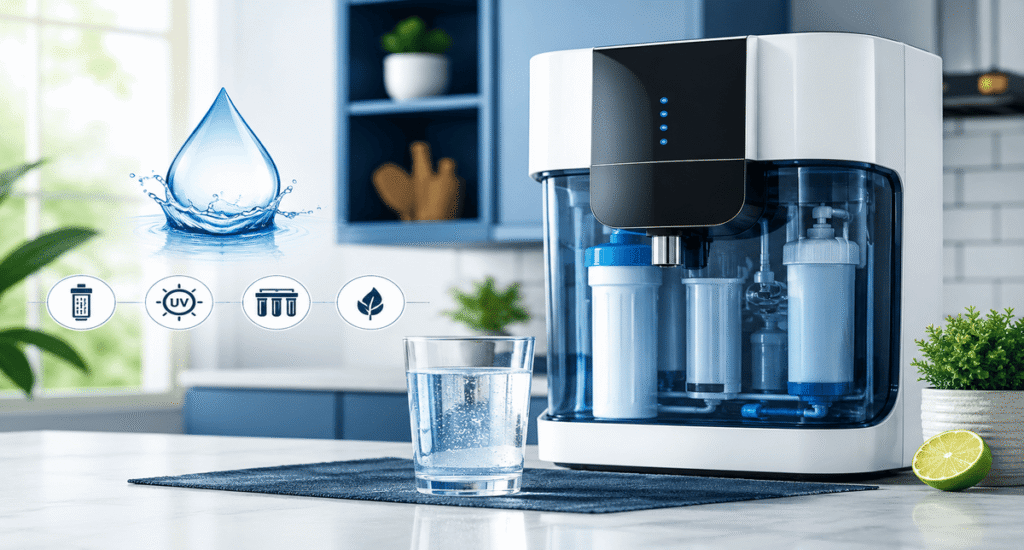
Access to clean and safe drinking water is essential for every household. With increasing water pollution and varying water quality across India, choosing the right water purifier has become more important than ever. Whether your water source is borewell, tanker, or municipal supply, selecting the right home water filter ensures your family’s health and safety.
At Superior Solar, we understand the importance of clean water solutions for modern homes. This guide will help you understand different types of water filtration systems, key factors to consider, and how to select the best option for your needs.
What Type of Water Purifier is Best for Home?
The answer depends on your water source and contamination level. Different purifiers are designed to handle different types of impurities. Understanding these technologies will help you make an informed decision.
Types of Water Purifiers
- RO (Reverse Osmosis) Water Purifier: Ideal for high TDS (Total Dissolved Solids) water like borewell or tanker supply. It removes heavy metals, salts, and harmful chemicals.
- UV (Ultraviolet) Water Purifier: Best for municipal water with low TDS. It kills bacteria and viruses but does not remove dissolved impurities.
- UF (Ultrafiltration) Water Purifier: Works without electricity and removes bacteria and suspended particles. Suitable for low contamination water.
- RO + UV + UF Combination Systems: The most advanced water filtration system, offering multi-stage purification for maximum safety.
How to Check Water Quality at Home?
Before buying a water filter, it’s important to test your water quality. This helps you choose the right purification method.
Key Factors to Check:
- TDS Level (below 300 is safe, above 500 needs RO)
- Presence of bacteria/viruses
- Hardness of water
- Chemical contamination
Which Water Purifier is Best for Borewell Water?
Borewell water usually contains high TDS, heavy metals, and hardness. In this case, a RO water purifier is the best choice.
Recommended Option:
- RO + UV purifier for complete purification
- High storage capacity for consistent supply
- Advanced filters for heavy metal removal
If your home relies on borewell water, investing in a high-quality house water filter system is essential.
How to Choose the Right Water Filtration System?
Choosing the right water filtration system depends on multiple factors. Instead of focusing only on price, consider long-term performance and safety.
Important Factors to Consider
- Water Source
- Borewell → RO purifier
- Municipal supply → UV/UF purifier
- Mixed sources → RO + UV system
- TDS Level
Higher TDS requires RO purification, while low TDS can be managed with UV or UF systems.
- Storage Capacity
Choose based on family size:
- Small family (2–3 members): 5–7 liters
- Medium family: 7–10 liters
- Large family: 10+ liters
- Maintenance Cost
Check filter replacement frequency and service availability. A good home water filter should be easy to maintain.
- Brand & After-Sales Service
Reliable brands ensure better performance and long-term support.
RO vs UV vs UF: Which One Should You Choose?
This is one of the most searched questions when buying a water purifier for home.
Feature | RO | UV | UF |
Removes TDS | ✅ | ❌ | ❌ |
Kills bacteria | ✅ | ✅ | ✅ |
Requires electricity | ✅ | ✅ | ❌ |
Best for | Hard water | Soft water | Low contamination |
Best Choice: RO + UV combination for Indian households.
What is the Ideal Water Purifier for Apartments?
Apartments usually receive treated municipal water, but contamination can still occur during storage and distribution.
Best Options:
- UV + UF purifier for low TDS water
- RO purifier if TDS is high
- Compact wall-mounted home water filter systems
How Often Should You Change Water Filters?
Maintenance plays a key role in ensuring safe drinking water.
General Guidelines:
- Sediment filter: Every 3–6 months
- Carbon filter: Every 6–12 months
- RO membrane: Every 1–2 years
Regular servicing improves the lifespan of your water filtration system and ensures consistent performance.
Is RO Water Safe for Drinking?
Yes, RO water is safe when the purifier includes a TDS controller or mineralizer. These features retain essential minerals while removing harmful contaminants. According to studies and water safety standards, balanced mineral content is important for health. Learn more about safe drinking water standards
What Features Should You Look for in a Water Purifier?
Modern water purifiers come with advanced features that improve usability and safety.
Must-Have Features:
- Multi-stage purification
- TDS controller
- Mineral enhancer
- Auto shut-off
- Filter change indicator
- Energy-saving mode
These features ensure your home water filter delivers clean and healthy drinking water.
How Much Does a Water Purifier Cost in India?
The price of a water purifier depends on technology and features.
Price Range:
- Basic UF purifier: ₹3,000 – ₹6,000
- UV purifier: ₹6,000 – ₹10,000
- RO purifier: ₹10,000 – ₹25,000+
While budget matters, always prioritize quality and safety over price.
Conclusion:
Choosing the right water purifier is not just about convenience, it’s about protecting your family’s health. By understanding your water quality, comparing purification technologies, and selecting the right water filtration system, you can ensure safe and clean drinking water every day. At Superior Solar, we are committed to helping you find reliable and efficient home solutions, including the best home water filter systems tailored to your needs. Whether you need guidance or installation support, our team is here to help you make the right choice for a healthier lifestyle.
Frequently Asked Questions:
1. Which water purifier is best for home use in India?
A RO + UV water purifier is the best option for most homes, as it handles both dissolved impurities and microorganisms.
2. Do I need a water purifier if I get municipal water?
Yes, because contamination can occur in pipelines or storage tanks.
3. What is the best TDS level for drinking water?
A TDS level between 50–150 ppm is considered ideal for drinking.
4. Can I install a water purifier myself?
Basic models can be self-installed, but professional installation is recommended for best performance.
5. Which is better: water filter or water purifier?
A water purifier is more advanced than a basic water filter, as it removes both physical and chemical impurities.